Custom Website Development Services: A Step-by-Step Guide
Custom website development services are professional engagements in which an agency designs and builds a website from scratch, tailored entirely to your business requirements rather than adapting a pre-built template. Understanding what these services include — and how a project progresses from brief to launch — helps you brief an agency effectively, evaluate proposals accurately, and set realistic expectations for your investment.
What Are Custom Website Development Services?
Custom website development services differ fundamentally from template-based web design. Rather than purchasing a theme, applying your logo and colours, and filling in content, a custom development engagement builds the site’s design system and codebase from the ground up. The result is a website with no inherited constraints from a third-party theme and no unnecessary code from features you do not use.
Businesses pursue custom website development services for several reasons:
- Their functional requirements cannot be met by off-the-shelf solutions.
- Their brand identity requires a visual language that templates cannot reproduce accurately.
- Performance, SEO, and scalability requirements exceed what builder platforms support.
- They need specific integrations with existing business systems — CRMs, ERPs, booking systems, or proprietary databases.
The Custom Website Development Process: Step by Step
Step 1: Discovery and Requirements Analysis
Every well-run custom website development project begins with a structured discovery phase. The agency asks about your business goals, target audience, existing technical infrastructure, competitive landscape, and the specific outcomes you need the site to deliver. This phase produces a project brief that defines scope, architecture, and success criteria before any design or code work begins.
The discovery phase is what separates agencies that produce genuinely strategic work from those that begin designing immediately. A brief that is not well understood produces a site that must be heavily revised — adding time and cost to the project.
Step 2: Information Architecture and Site Map
Once requirements are understood, the agency maps the site’s structure: which pages exist, how they relate to each other, what content appears on each page, and how users navigate from entry point to conversion. This information architecture document is the foundation on which all design and development work is built. Changes at this stage are inexpensive; changes during development are significantly more costly.
Step 3: Design
The design phase produces high-fidelity mockups of the key pages — typically the homepage, a representative interior page, and any pages with complex layouts or unique functionality. Mockups show the visual design, typography, colour system, spacing, and component library. The client reviews and approves these before development begins, ensuring that the development phase does not require redesign work mid-build.
Responsive design is included as standard: separate mockups or design notes covering mobile and tablet layouts ensure the site looks and functions correctly at all screen sizes.
Step 4: Development
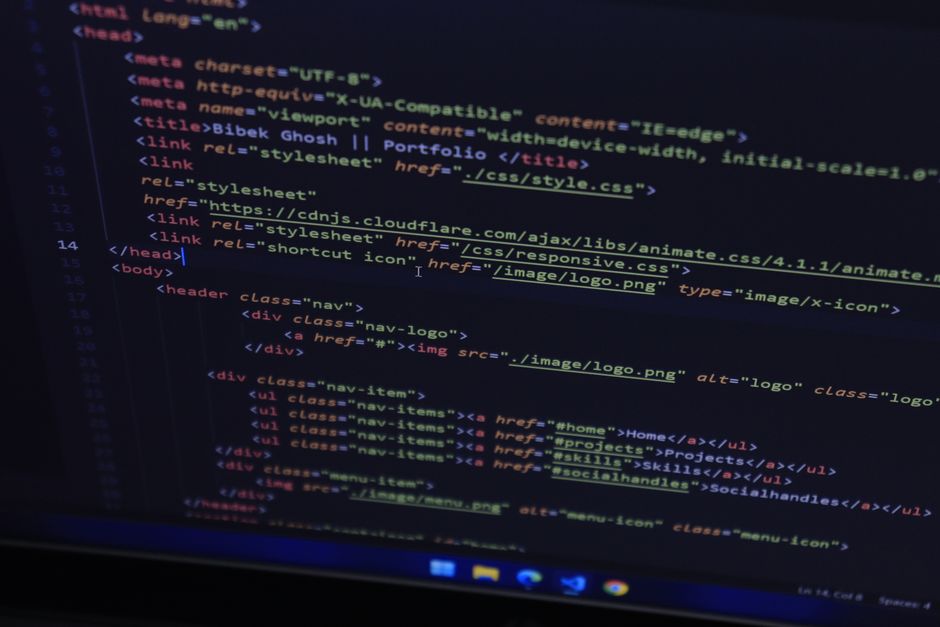
With approved designs, the development phase begins. Front-end developers convert the mockups into HTML, CSS, and JavaScript. Back-end developers build the server-side logic, CMS configuration, and database structure. Third-party integrations — CRM sync, payment gateways, external APIs — are built and tested during this phase.
For most business websites, the CMS is WordPress with a custom theme and carefully selected plugins. The custom theme is written specifically for the project; it does not inherit the code or constraints of any marketplace theme.
Step 5: Testing and Quality Assurance
A professional agency conducts structured testing before any site is delivered. This includes:
- Cross-browser compatibility (Chrome, Firefox, Safari, Edge)
- Device testing across representative screen sizes
- Performance benchmarking against Core Web Vitals thresholds
- Functional testing of all forms, interactive elements, and integrations
- Accessibility audit against WCAG standards
- SEO technical check: sitemaps, canonical tags, meta tags, schema markup
Step 6: Launch
Launch involves migrating the site to the production server, configuring DNS, running a final QA pass on the live environment, and submitting the sitemap to search engines. A professional agency runs a pre-launch checklist that covers every technical and functional element before the site goes public.
Step 7: Post-Launch Support and Maintenance
A custom-built website requires ongoing maintenance: security updates, plugin updates, performance monitoring, and occasional content or functional changes. Confirm the agency’s post-launch support terms before the project begins — handoff without support can leave a business without technical help at the point it is most needed.
How to Write a Brief for Custom Website Development Services
A good brief reduces scope creep, speeds up the discovery phase, and produces more accurate proposals from agencies. Include:
- Business description and primary goals for the website
- Target audience and their primary needs when they visit the site
- Required pages and the purpose of each
- Functional requirements: forms, integrations, user accounts, e-commerce, etc.
- Any technical constraints: existing systems, hosting preferences, CMS requirements
- Timeline and launch date if fixed
- Examples of sites you consider well-designed, with notes on what specifically you find effective
See our guide on custom web development vs website builders for context on whether a fully custom build is the right approach for your business. For a broader view, our guide on website design and development explains how both disciplines work together throughout a professional project.
Generate a robots.txt for Your Custom Site
When your custom site launches, your robots.txt file controls which pages search engines crawl. An incorrect file can prevent key pages from being indexed. Use the tool below to generate a standards-compliant robots.txt for your domain:
Place robots.txt at your domain root, e.g. https://example.com/robots.txt. Test it with Google's robots.txt tester.
Frequently asked questions
What are custom website development services?
Custom website development services are professional engagements in which an agency designs and builds a website from scratch for your business. Unlike template-based builds, every element — design system, codebase, CMS configuration, and integrations — is created to your requirements with no inherited constraints from a third-party theme.
How long do custom website development services take?
A standard custom business website typically takes eight to sixteen weeks from discovery to launch. Projects with complex functionality, multiple integrations, or large content libraries take longer. The discovery, design approval, and testing phases each require adequate time and should not be compressed.
What is included in a custom website development engagement?
A comprehensive custom development engagement includes discovery and requirements analysis, information architecture, visual design for desktop and mobile, front-end and back-end development, CMS integration, performance optimisation, testing and QA, launch, and post-launch support. The exact scope varies by project and agency.
What is the difference between custom development and using a premium theme?
Custom development produces code written specifically for your site. A premium theme is a pre-built template adapted with your branding and content. Custom development is leaner, faster, fully brand-aligned, and free of the inherited code and constraints that come with any template built for a general audience.
How do I choose a custom website development agency?
Evaluate agencies on their portfolio of genuinely custom builds (not theme adaptations), their discovery process, their performance track record, their post-launch support arrangements, and the clarity of their communication. Request references from clients whose project complexity is similar to yours before committing.
Summary
Custom website development services follow a structured process — discovery, design, development, testing, and launch — that produces a website built precisely for your business. Nexsage’s website development service covers every stage of this process, with a dedicated team for each discipline and clear ownership throughout the project lifecycle.
Request a Quote